A incomes will rise resulting in a tax decrease. The aggregate demand curve for the data given in the table is plotted on the graph in Figure 221 Aggregate Demand.
3 3 Demand Supply And Equilibrium Principles Of Economics
This is called an increase in demand.

. This leads to competition among buyers which raises the price. Buyers desire to purchase less of it. The nature of demand indicates that as the price of a good increases.
Changes in demand as a result of non-price determinants are also termed as. They know their homes and other investments will increase in. Supply and demand is a framework we use to explain and predict the equilibrium price and the quantity of good.
Demand-pull inflation is the increase in aggregate demand categorized by the four sections of the macroeconomy. 2 When families feel confident they spend more instead of saving. Thus a change in demand is a result of non-price determinants coming into force.
For example if the income of a consumer increases or if the fashion for a goods increases the consumer will buy greater quantities of the goods than before at various given prices. I Increase in Demand. Interest rate effect The tendency for a change in the price level to affect the interest rate and thus to affect the quantity of investment demanded.
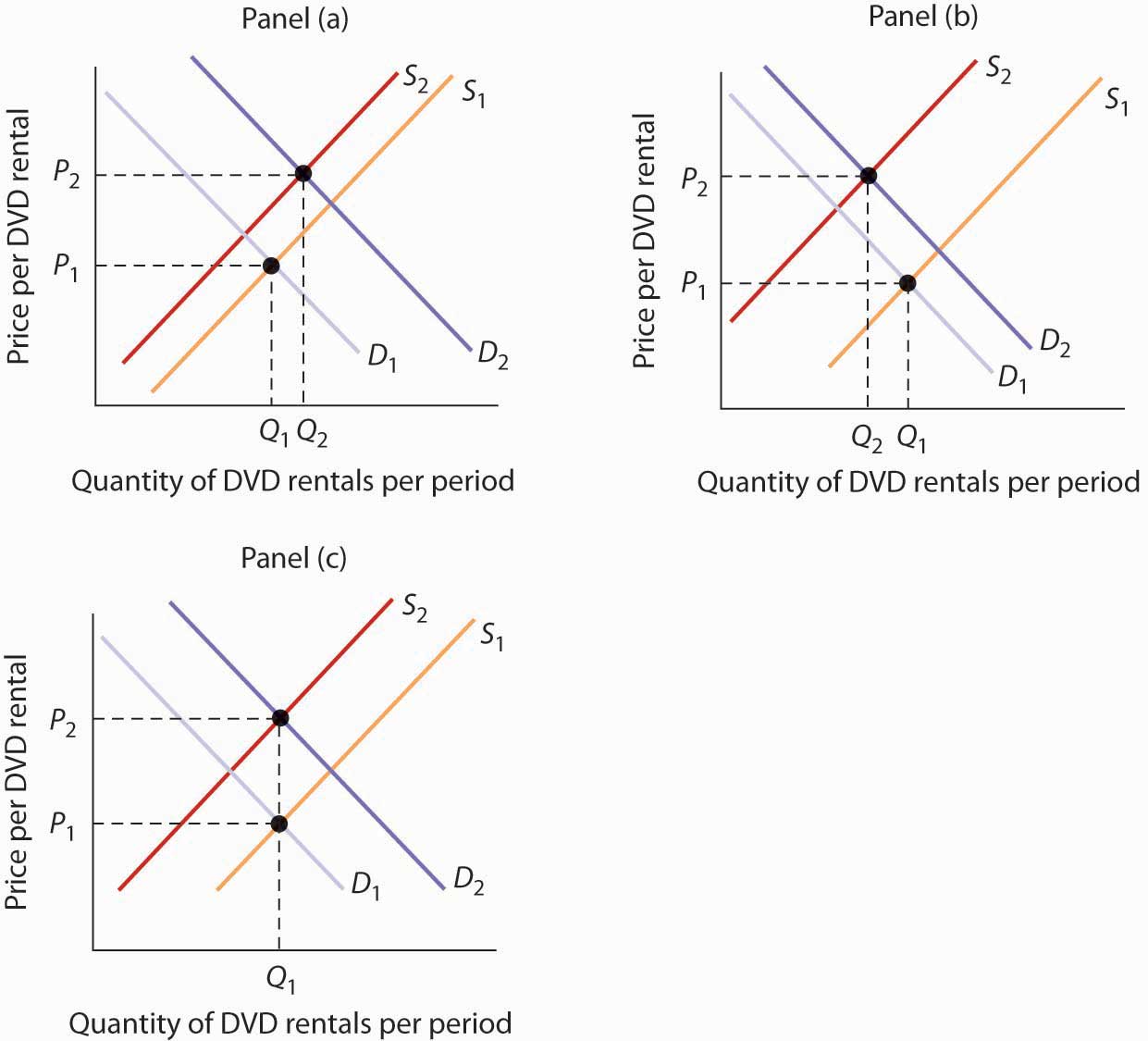
The supply curve has shifted to the right and the demand curve has shifted to the left. Resultantly demand will change even if the price and supply of the product remain the same. Until price changes in response to a demand increase the quantity demanded will be less than quantity supplied.
The increase in demand increase in supply If the increase in both demand and supply is exactly equal there occurs a proportionate shift in the demand and supply curve. A The supply is greater than the demand. A point on the market demand curve shows the quantity that demanders are willing to buy for a given price.
As a result of an increase in consumer incomes the demand for Meeps has decreased. Increase in demand means the consumer buys more of the good at various prices than before. When demand increases to D 1 D 1 it creates an excess demand at the old equilibrium price of OP.
Change in Quantity Demanded. A Growing Economy The first is a growing economy. Demand-pull inflation is a tenet of Keynesian economics that describes the effects of an imbalance in aggregate supply and demand.
Shift of the demand curve to the right indicates an increase in demand at the same price because a factor such as consumer trend or taste has risen for it. Now due to the higher price manufacturers of the product also increase their supply to cover extra demand in the market. An increase in demand assuming no change in supply leads to a rightward shift in demand curve from DD to D 1 D 1 Fig.
Both the supply and demand curves have shifted to the left. An increase in the costs of. Households business governments and foreign buyers.
The supply curve has shifted to the left and the demand curve has shifted to the right. However the equilibrium quantity rises. Consequently the equilibrium price remains the same.
As a result there has been an increase in the equilibrium quantity and an. A contractionary supply shock would most likely result in A an increase in aggregate demand B an increase in national income C an increase in GDP D. When the aggregate demand in an economy strongly outweighs the.
Other factors that would contribute to a decrease in the demand for gasoline would be increased use of public transportation more carpooling and people moving closer to their jobs. Income consumer tastes expectations price of related goods and number of buyers. At point C a reduction in the price level to 114 increases the quantity of goods and services demanded to 12000 billion.
A change in demand occurs when appetite for goods and services shifts even though prices remain constant. Refer to the above graph showing the market for a product. When the economy is flourishing and incomes are rising consumers could feasibly purchase.
The increase in demand increase in supply. They expect to get raises and better jobs. Aside from price other determinants of demand that affect the demand schedule or chart are.
A change in demand refers to an increase or decrease in demand that is brought about by a change in the other factors except price. Since supplies are short the price of the product will increase. There are six causes of demand-pull inflation 1.
Which of the following would best explain why the shift in demand from D1 to. At point A at a price level of 118 11800 billion worth of goods and services will be demanded. A point on the market supply curve shows the quantity that suppliers are willing to sell for a given price.
As a result there has been an increase in the equilibrium price and an uncertain effect on the equilibrium quantity. Which of the following explains why 7 is not an equilibrium price in the market for blankets. Which of the following best explains why equilibrium income will rise by more than 100 in response to a 100 increase in government spending.
The overall demand for gasoline would go down if there was an increase in the number of people who started driving cars that were more fuel efficient. The tendency for people to increase their consumption spending when the value of their financial and real assets rises and to decrease their consumption spending when the value of those assets falls.

14 Best Practices For Improving Organic Search Rankings On Google Search Ranking Organic Search Infographic
/ChangeInDemand2-bd35cddf1c084aa781398d1af6a6d754.png)
Change In Demand Definition

Best Protein Powder For Muscle Gain Protein Shop Near Me Best Protein Protein Shop Protein Supplements
Pin On Statistics



0 Comments